


'50s John Henry Tele Replica Series
Faithfully Recreating the Original Telecasters of the 1950s
The John Henry Guitars Tele Replica Series is dedicated to the faithful recreation of the original Fender® Telecasters produced during the 1950s. Rather than offering a generic vintage-inspired instrument, each model accurately reproduces the construction methods, materials, hardware, electronics and manufacturing details specific to a particular year of production.
 |  |  |  |  |  |
|---|
John Henry 1953 and 1955 Tele Replica
Each instrument in the John Henry Guitars Tele Replica Series is a hand-built reproduction of an original 1950s Fender® Telecaster®. Every specification, dimension and construction feature has been developed through the study of documented vintage instruments and original period manufacturing practices, with the objective of recreating not only the appearance of the originals, but also their construction methods, playing characteristics and tonal response.
The body is constructed from two pieces of lightweight swamp ash joined by an off-centre seam, selected for weight, grain orientation and resonance. Traditional pore filler is applied beneath a thin nitrocellulose lacquer finish, developed from original period colour references and aged to reproduce the natural wear, checking and patina acquired through decades of use.
Body construction follows original 1950s Fender manufacturing methods throughout. Correct horn and cutaway geometry, vintage edge radii, the characteristic router hump and protruding neck-pocket lip are faithfully reproduced. Period-correct pickup routings, the traditional diagonal wiring channel, flush-mounted rear string ferrules and original tooling details—including accurately positioned body dowels and nail holes—are incorporated throughout the construction process.
The neck is carved from a single piece of quarter-sawn maple with a 25.5-inch scale length and a 7.25-inch fingerboard radius. Truss rod adjustment is provided by a traditional single-action rod installed beneath a walnut skunk stripe and matching walnut plug. A hand-shaped bone nut is fitted at the headstock. The neck is finished in thin nitrocellulose lacquer and aged to match the body while preserving the smooth feel of a well-played vintage instrument.
Neck dimensions and contours are based upon documented original examples, featuring an authentic mid-century profile, rolled fingerboard edges and vintage fretwire across all 21 frets. Black fibre position markers are installed using period-correct spacing, while the headstock reproduces the subtle Tadeo Gomez-style transition together with historically accurate contours and thickness. Vintage heel shaping, original pin-router hole locations and numerous period-correct construction details are faithfully preserved throughout.
Hardware follows original 1950s Fender specifications throughout the instrument. Vintage-style Kluson tuning machines are paired with a round string tree, while the neck is secured using a period-correct neck plate fitted with long mounting screws. String anchoring and intonation are provided by a Mark Foley bridge assembly featuring period-correct stamping, brass barrel saddles and a traditional ashtray bridge cover.
Model-specific appointments—including finish colour, pickguard material, electronics and hardware specifications, from tuning machines, neck plate and bridge assembly down to the correct screw types—faithfully reflect the year being reproduced while maintaining complete historical consistency. All metal components receive the appropriate combination of nickel and chrome plating specified for the selected model year.
The instrument is equipped with the appropriate John Henry Guitars Tele Replica pickup set for the selected model year. Every pickup features period-correct black-bottom Forbon flatwork finished in nitrocellulose lacquer, vintage-correct Plain Enamel magnet wire, traditional hand-guided winding techniques and historically accurate magnet alloys and geometries. The neck pickup is fitted with a vintage-style chrome-plated brass cover and is lacquer potted, while the bridge pickup incorporates traditional cotton twine wrapping together with a cold-rolled steel baseplate finished in dull cyanide-copper plating and is potted in lamp-black paraffin. Magnet type and winding specifications follow original Fender production practice appropriate to each model year.
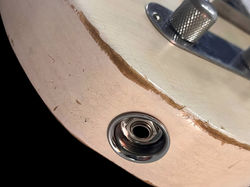
The control assembly is constructed using a CRL three-way selector switch, CTS Vintage Taper calibrated 250k potentiometers and period-correct Luxe Radio Phonebook capacitor. The entire wiring harness is assembled using vintage cloth push-back wire with individually tinned conductors, while signal output is provided through a traditional pressed-steel jack cup. The traditional control assembly follows the original Dark Circuit wiring scheme, although a modern wiring configuration is also available upon request.
Every component has been selected not only for historical accuracy but also for long-term reliability, ensuring that each instrument delivers the appearance, feel, sound and response of an exceptional original 1950s Telecaster while remaining fully suitable for professional use.
1953 Tele “Blackguard” Replica
 |  |  |  |  |  |  |  |  |
|---|
The Ultimate Blackguard
The 1953 Blackguard represents the final evolution of the original early Telecaster before the cosmetic changes introduced during the mid-1950s. The body is finished in thin Butterscotch Blonde nitrocellulose lacquer, carefully developed to reproduce the warm amber hue and remarkable transparency of original Blackguard examples. As on vintage instruments, the finish allows the grain of the lightweight swamp ash body to remain clearly visible, gradually developing the rich patina and colour variation that have become synonymous with early-1950s Telecasters. A black phenolic pickguard bearing the characteristic lacquer-can imprint completes the unmistakable appearance of the Blackguard era.
Model-specific appointments include No-Line Kluson tuning machines, a bridge stamped with the instrument's serial number and the characteristic mixture of Phillips-head and slot-head screws used during 1953 production.
The instrument is equipped with a John Henry Guitars 1952 Tele Replica pickup set measuring 7.3 kΩ in the neck position and 7.1 kΩ in the bridge position. Both pickups utilise flat, lightly bevelled .195-inch sand-cast Alnico 3 magnets with north polarity up.
1955 Tele Replica
 |  |  |  |  |  |  |  |  |
|---|---|---|---|---|---|---|---|---|
 |
The refined Tele
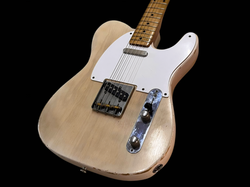
By 1955, the Telecaster had adopted the refinements that would define the model throughout the remainder of the decade, beginning with a finish that was noticeably less prone to yellowing. The body is finished in White Blonde nitrocellulose lacquer, carefully developed to reproduce the translucent appearance of original mid-1950s examples. As on vintage instruments, the lightweight swamp ash body remains clearly visible beneath the finish, while the characteristic lighter halo around the body edges faithfully recreates the effect produced by the original spraying process. A single-ply white pickguard completes the clean, elegant aesthetic that became synonymous with the Telecasters of the mid-1950s.
Model-specific appointments include Single-Line Kluson Deluxe tuning machines and a neck plate stamped with the instrument's serial number.
The instrument is equipped with a John Henry Guitars 1955 Tele Replica pickup set measuring 7.5 kΩ in the neck position and 7.3 kΩ in the bridge position. Both pickups utilise vintage stagger, lightly bevelled .195-inch sand-cast Alnico 5 magnets with north polarity up.
Fender® and Telecaster® are registered trademarks of Fender Musical Instruments Corporation. John Henry Guitars is not affiliated with or endorsed by Fender Musical Instruments Corporation.
IMPORTANT INFORMATION!
Because every project is bespoke, prices vary depending on the requested specifications and level of customization.
For this reason, we do not publish fixed prices. Please contact us by email to discuss your project and request a personalised quotation. We will be pleased to guide you through the available options and prepare a detailed proposal based on your individual requirements.